
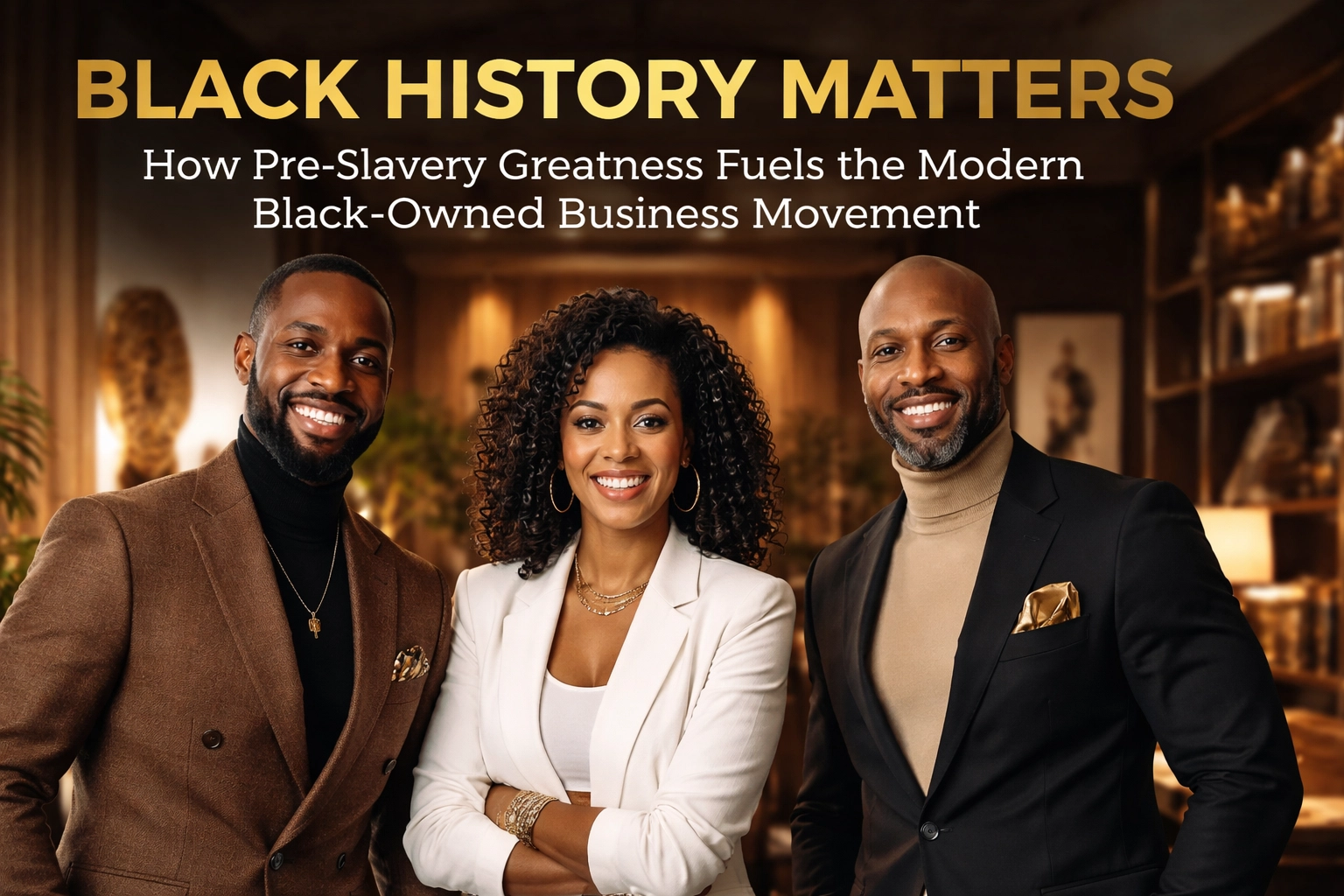
Black History Matters: How Pre-Slavery Greatness Fuels the Modern Black-Owned Business Movement

Let's get something straight right off the bat: Black history didn't start with slavery. Not even close.
Before the transatlantic slave trade attempted to erase our identity, African civilizations were building empires, controlling global trade routes, establishing universities, and creating economic systems that would make modern Wall Street take notes. And here's the beautiful part, that same entrepreneurial DNA still runs through us today.
When you support a Black-owned business in 2026, you're not just making a purchase. You're participating in a legacy that stretches back thousands of years. Let's talk about it.
The Original Economists: Ancient Kemet and the Blueprint for Wealth
Before Greece, before Rome, there was Kemet, what we now call Ancient Egypt. And yes, it was an African civilization built by African people.
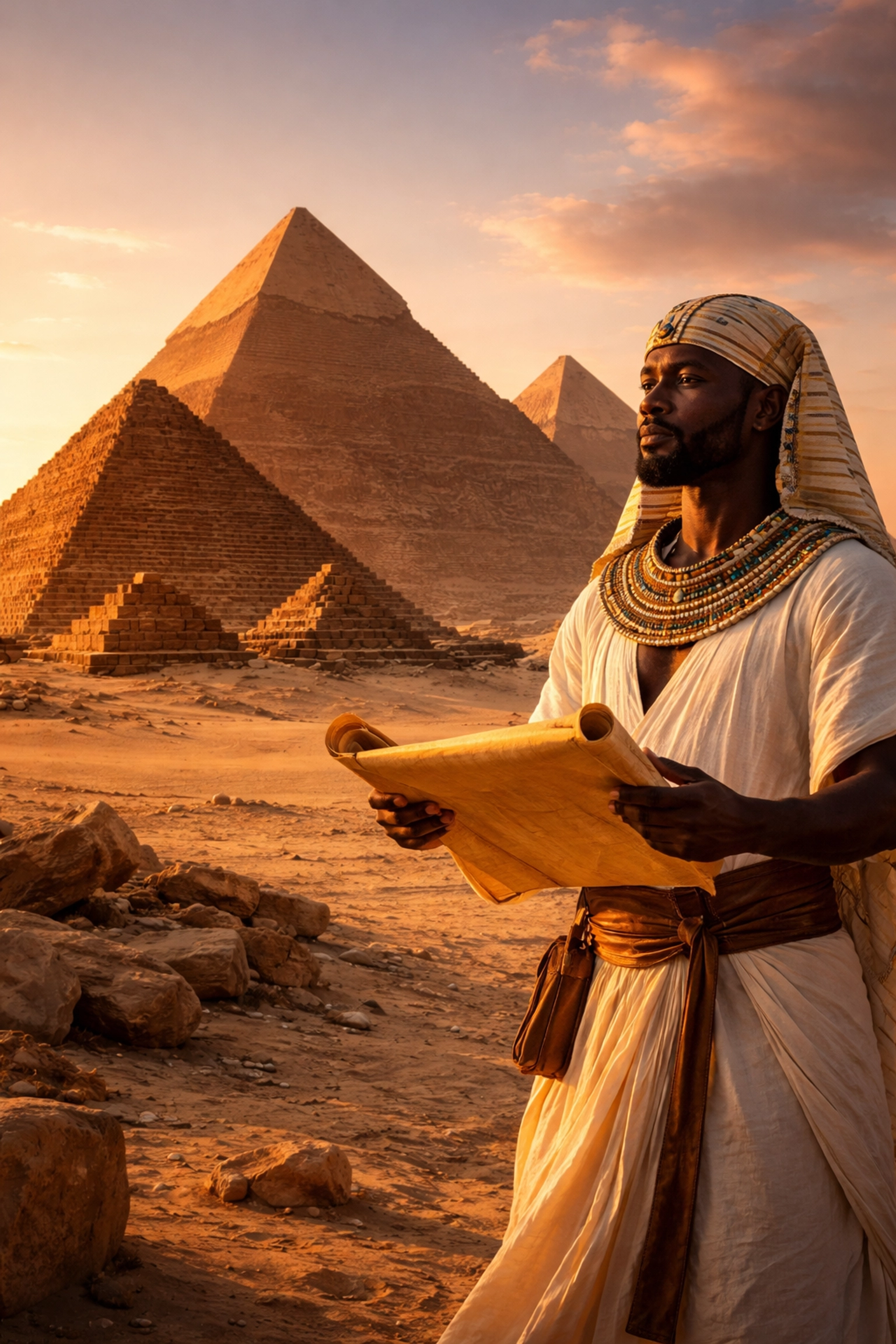
The achievements of Kemet weren't just impressive for their time, they're impressive, period. We're talking about a society that:
- Developed early forms of paper (papyrus) that revolutionized record-keeping and commerce
- Created written scripts that allowed for complex trade documentation
- Advanced mathematics, including geometry and algebra, skills essential for building pyramids AND running a business
- Pioneered agricultural techniques that fed millions and created surplus for trade
Did You Know? The pyramids of Giza required the coordination of approximately 20,000-30,000 workers over decades. That's not just construction, that's project management, logistics, payroll, and supply chain coordination on a massive scale. Ancient Africans were running operations that would rival Fortune 500 companies today.
The Kemetic people understood something fundamental: knowledge is wealth, and systems create empowerment. They didn't just survive, they thrived and built structures that still stand 4,500 years later.
West African Empires: Where Gold Flowed Like Water
Now let's travel west, where empires like Ghana, Mali, and Songhai dominated global trade for centuries.
The Kingdom of Ghana (9th-11th century) wasn't playing around. Historians documented a kingdom with "great power" and an army of 200,000 men. But their real strength? Gold mining and trade. They controlled the gold that Europe desperately wanted, and they set the terms.
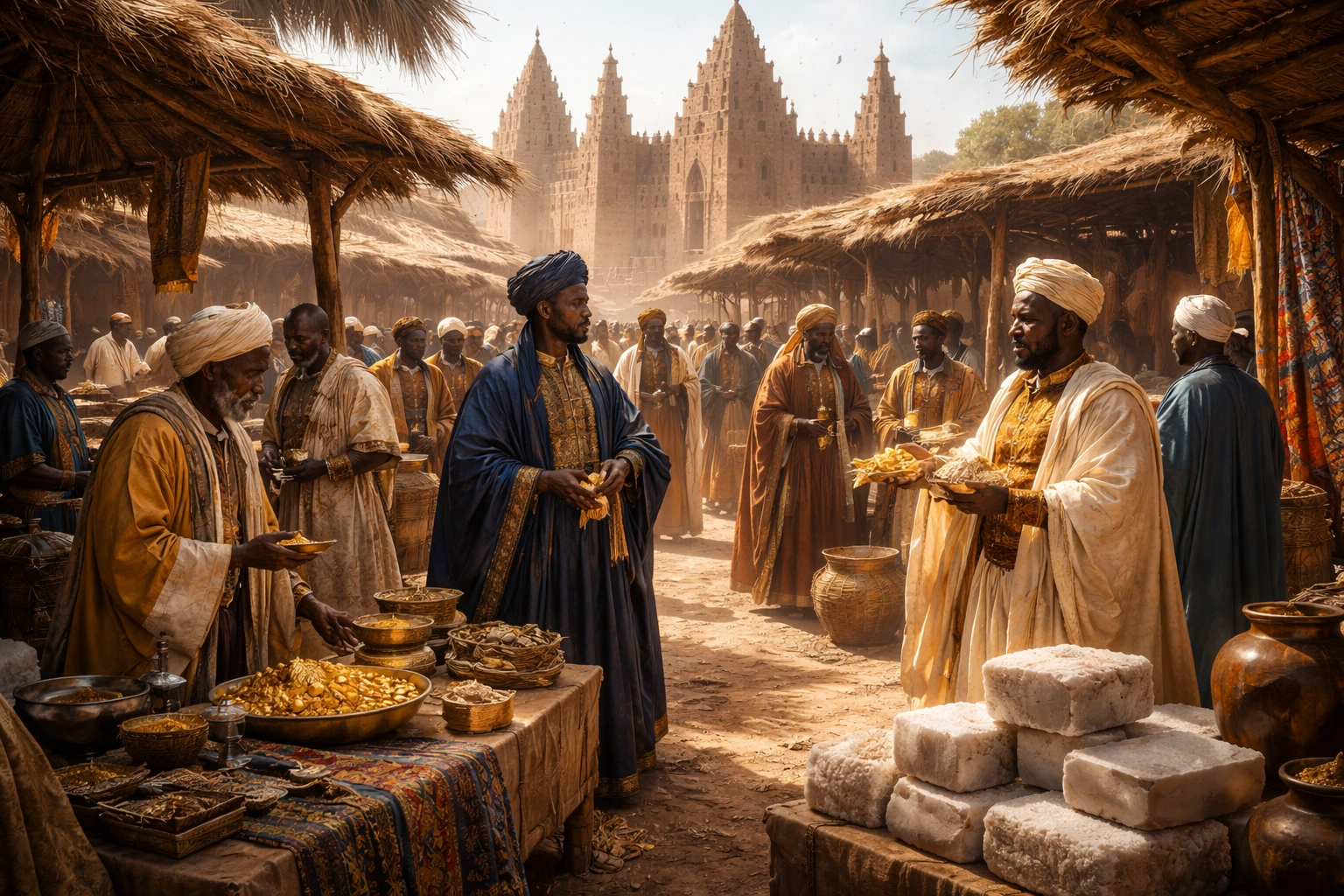
Then came the Mali Empire, with Mansa Musa: arguably the richest person to ever live. When he made his pilgrimage to Mecca in 1324, he gave away so much gold that he crashed economies along the way. That's generational wealth on a level most people can't even imagine.
The Songhai Empire took things even further by establishing Sankore University in Timbuktu. This wasn't just a school: it was a center of learning that attracted scholars from across Africa and the Arab world. The city was described as "full of exceedingly rich merchants" who traded in books, gold, salt, and ideas.
And let's not forget the Asante people, who governed through a constitution and assembly over a century before democracy emerged in North America. They controlled trade routes for ivory, gold, and grain while maintaining sophisticated governance structures.
These weren't "primitive" societies waiting to be "discovered." These were economic powerhouses with:
- Specialized miners and metallurgists creating valuable goods
- Advanced agricultural systems feeding entire regions
- Maritime navigation and ship-building technologies
- Artistic traditions in wood, stone, and metalwork that are still celebrated today
The Thread That Connects Us: From Ancient Empires to Modern Entrepreneurs
So what does any of this have to do with the Black-owned candle company you're thinking about supporting? Or the Black tech founder launching their app? Or the sister selling natural hair products from her kitchen?
Everything.
When we talk about supporting Black-owned businesses, we're not asking for charity. We're asking you to recognize that entrepreneurship is in our DNA. The same innovative spirit that built pyramids, controlled gold trade routes, and established universities is alive and well in every Black business owner grinding today.

The transatlantic slave trade tried to break that connection. It stripped away our languages, our religions, our family structures, and our economic systems. But here's what they couldn't take: our ability to create, innovate, and build.
Every Black entrepreneur today is reclaiming that legacy: whether they know it or not.
2026: The Modern Black Business Renaissance
Right now, we're witnessing something powerful. Black entrepreneurship is surging. According to recent reports, Black-owned businesses have been growing at faster rates than ever before, particularly in:
- E-commerce and digital marketplaces
- Health and wellness products
- Fashion and accessories
- Food and beverage
- Technology and creative services
And this isn't just about individual success: it's about community wealth building. When a Black-owned business thrives, that money circulates within our communities. It creates jobs. It funds scholarships. It builds generational wealth that was systematically denied for centuries.
Did You Know? Studies show that a dollar circulates in Black communities for only about 6 hours before leaving, compared to nearly a month in other communities. Supporting Black-owned businesses isn't just feel-good activism: it's an economic strategy for closing the wealth gap.
Why Blackwallstreets.store Exists
This is exactly why platforms like Blackwallstreets.store matter.
We're not just another marketplace. We're a digital continuation of the original Black Wall Street: Greenwood District in Tulsa, Oklahoma, where Black excellence flourished until it was violently destroyed in 1921. We're picking up that torch and running with it.
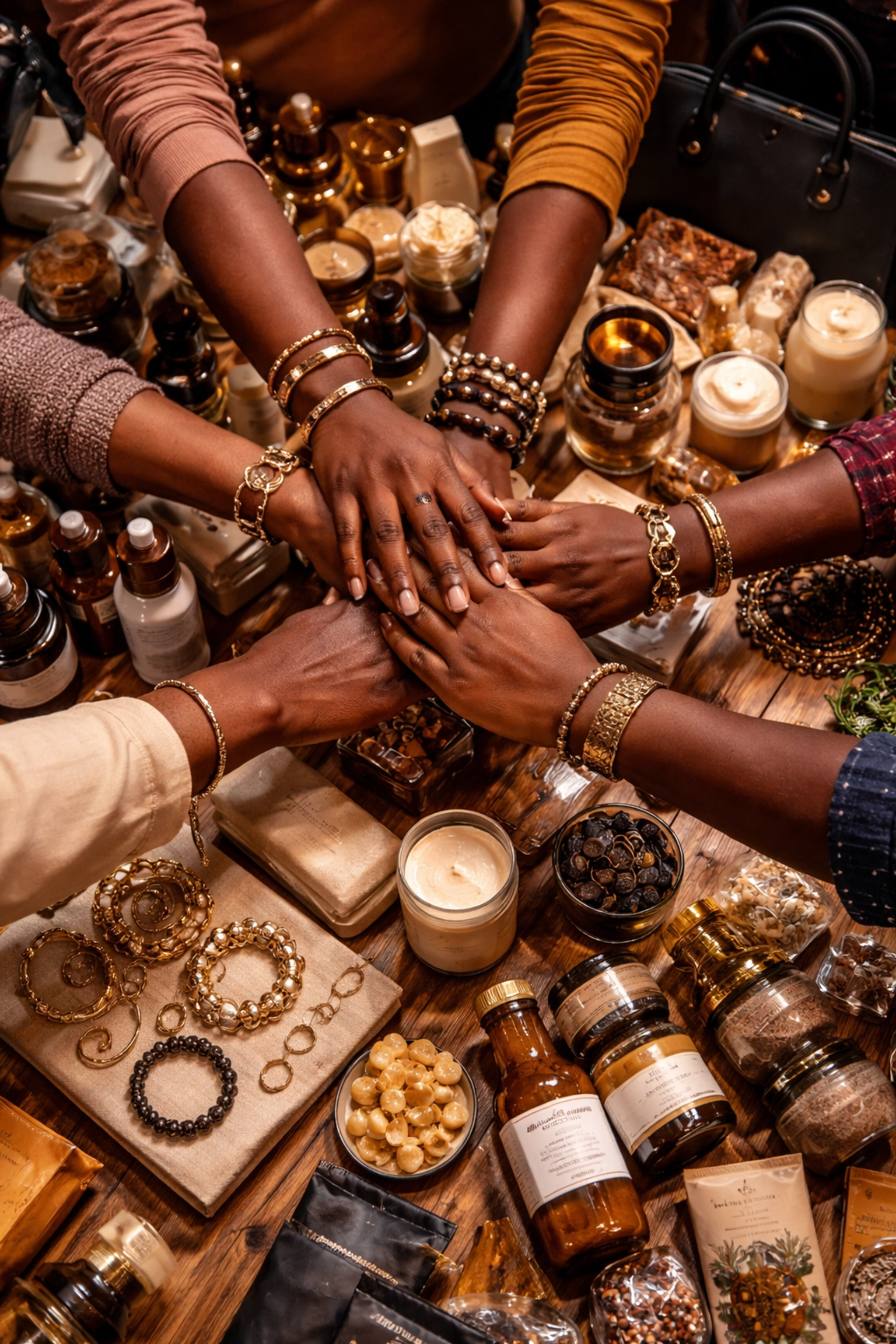
Our mission is simple: make it easy for you to find, support, and buy from Black-owned businesses. Whether you're looking for jewelry and accessories to elevate your style or discovering new Black-owned brands you've never heard of, we've got you covered.
Because when you shop with us, you're not just getting a product. You're:
- Honoring the legacy of Kemet, Mali, Songhai, and every African civilization that came before
- Investing in community wealth that stays within our neighborhoods
- Supporting entrepreneurs who are building the next generation of Black excellence
- Voting with your dollars for the world you want to see
The Call to Action: Be Part of the Movement
Here's the thing about history: it's not just something that happened. It's something we're creating right now, with every choice we make.
When you choose to support a Black-owned business, you're writing a new chapter. You're saying that the economic genius of Ancient Kemet, the trading power of the West African empires, and the resilience of our ancestors matters. You're declaring that Black excellence didn't end: it evolved.
So the next time someone asks why supporting Black-owned businesses matters, you can tell them: because we've been doing this for thousands of years. We built civilizations. We controlled trade routes. We established universities. And we're just getting started.
Ready to be part of the movement? Explore Black-owned businesses at Blackwallstreets.store and discover products that carry the weight of history and the promise of the future.
The Black Wall Streets is more than a marketplace; it's a movement. Learn more about our mission and join us in building generational wealth, one purchase at a time. ✊🏾