

The Journey of Excellence: From Kemet to 2026


There's a story that doesn't get told enough. It's not in most textbooks. It's not in mainstream movies. But it's real, it's documented, and it's ours.
This is the story of Black excellence: not as a moment, but as a continuous thread woven through thousands of years of human history. From the banks of the Nile to the digital marketplaces of today, our ancestors built, innovated, traded, and thrived. And that legacy? It lives on in every single one of us.
So let's take a walk through time together. Let's remember where we came from, honor those who paved the way, and recognize that what we're building today is simply the next chapter in a story that started long, long ago.
3100 BC – The Foundations of Civilization in Kemet
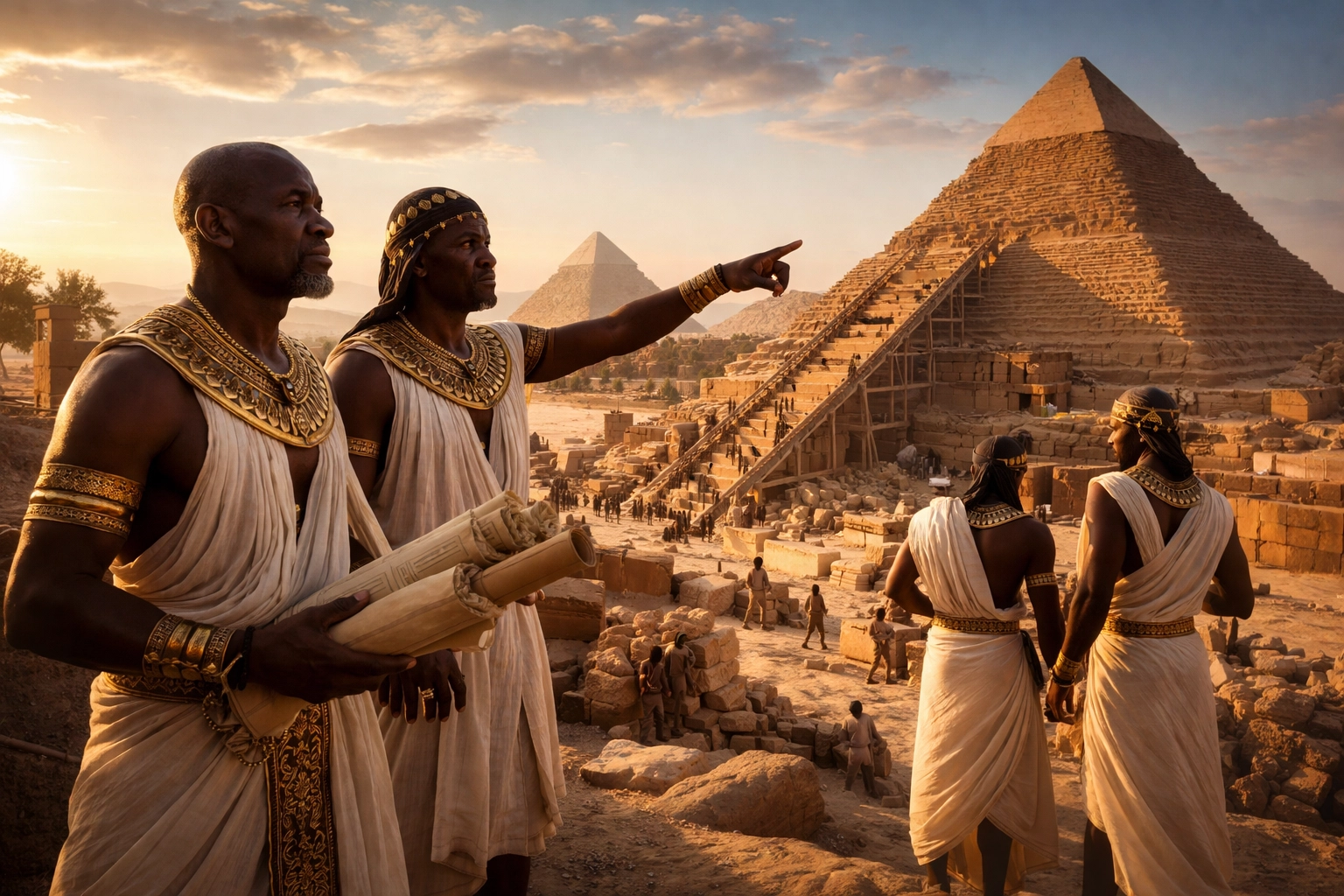
Before Greece. Before Rome. There was Kemet.
Known today as Ancient Egypt, Kemet literally translates to "the Black Land": named for the rich, dark soil deposited by the annual flooding of the Nile River. But it was more than fertile ground. It was the birthplace of architecture, astronomy, medicine, mathematics, and organized commerce.
The people of Kemet built the pyramids: structures so precise that modern engineers still scratch their heads trying to figure out how they did it. They developed writing systems, performed complex surgeries, and created trade networks that stretched across continents.
This wasn't just survival. This was excellence on a scale the world had never seen.
And here's what matters most: they looked like us. The builders, the scholars, the priests, the merchants: they were African. Our story doesn't begin in chains. It begins with crowns.
1324 AD – Mansa Musa and the Wealth of Mali
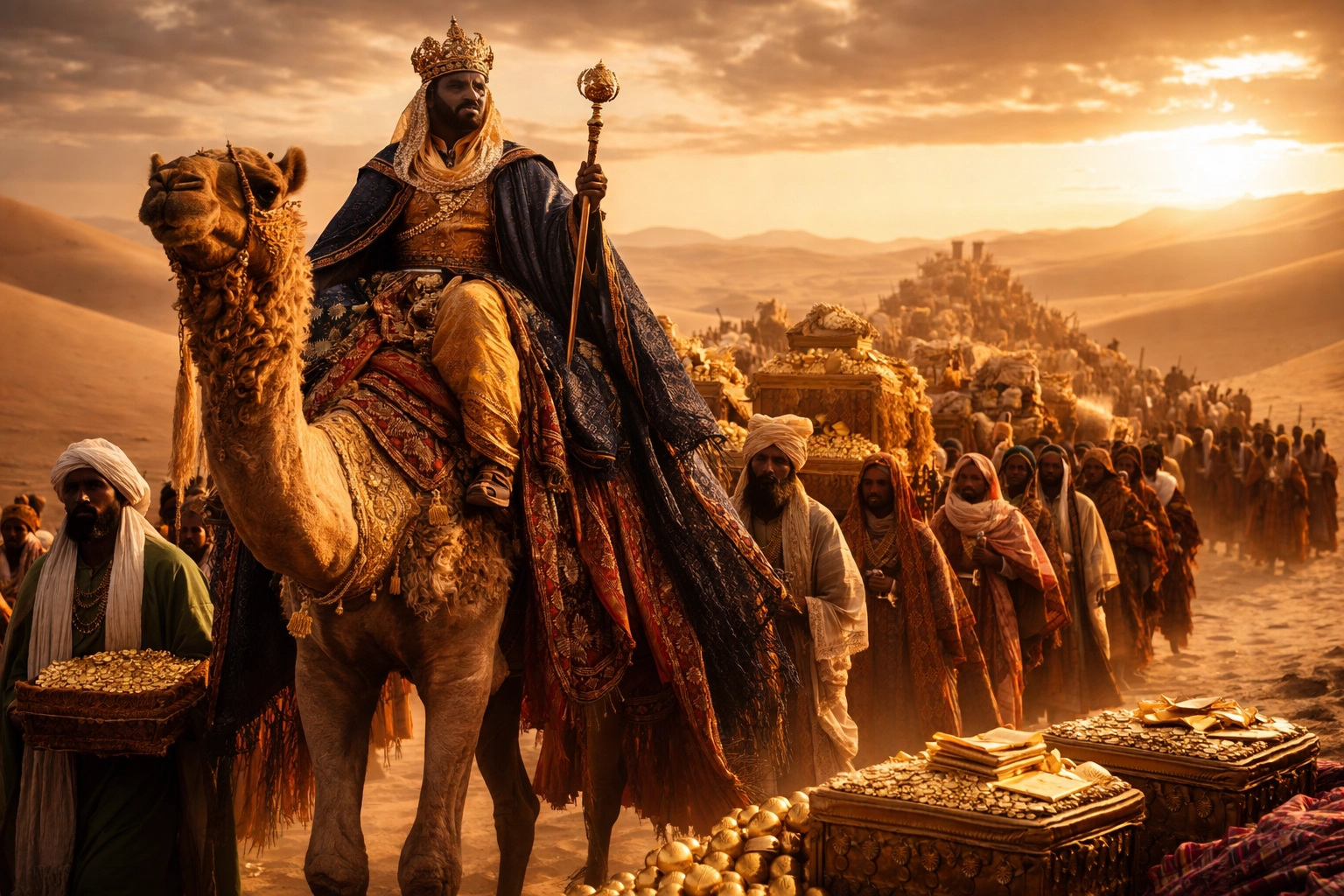
Fast forward a few thousand years, and we arrive in the Mali Empire during the reign of Mansa Musa: widely considered the wealthiest person to have ever lived. And we're not talking "rich" by ancient standards. We're talking wealth that would make today's billionaires look modest.
In 1324 AD, Mansa Musa embarked on his legendary pilgrimage to Mecca. His caravan was so massive and carried so much gold that when he passed through Cairo, his generous spending actually crashed the local economy for over a decade. Let that sink in.
But Mansa Musa wasn't just about the gold. He was about knowledge. He built universities, mosques, and libraries. He invited scholars from around the world to Timbuktu, transforming it into one of the greatest centers of learning on the planet.
This era reminds us that Black wealth isn't just possible: it's historical. It's documented. It's our inheritance.
1860s – Building From the Ground Up
Even in the darkest chapters of our history, the spirit of entrepreneurship refused to die.
In the years following emancipation, Black Americans faced unimaginable obstacles. Yet, instead of waiting for acceptance, they built their own. Independent Black towns began to spring up across the country: places like Nicodemus, Kansas and Mound Bayou, Mississippi.
These weren't just communities. They were complete economic ecosystems. Black-owned banks, general stores, farms, schools, and churches. Everything was built by Black hands for Black prosperity.
This era taught us something crucial: when they won't let you in, build your own table. That lesson echoes louder today than ever before.
1921 – The Height of Greenwood (The Original Black Wall Street)
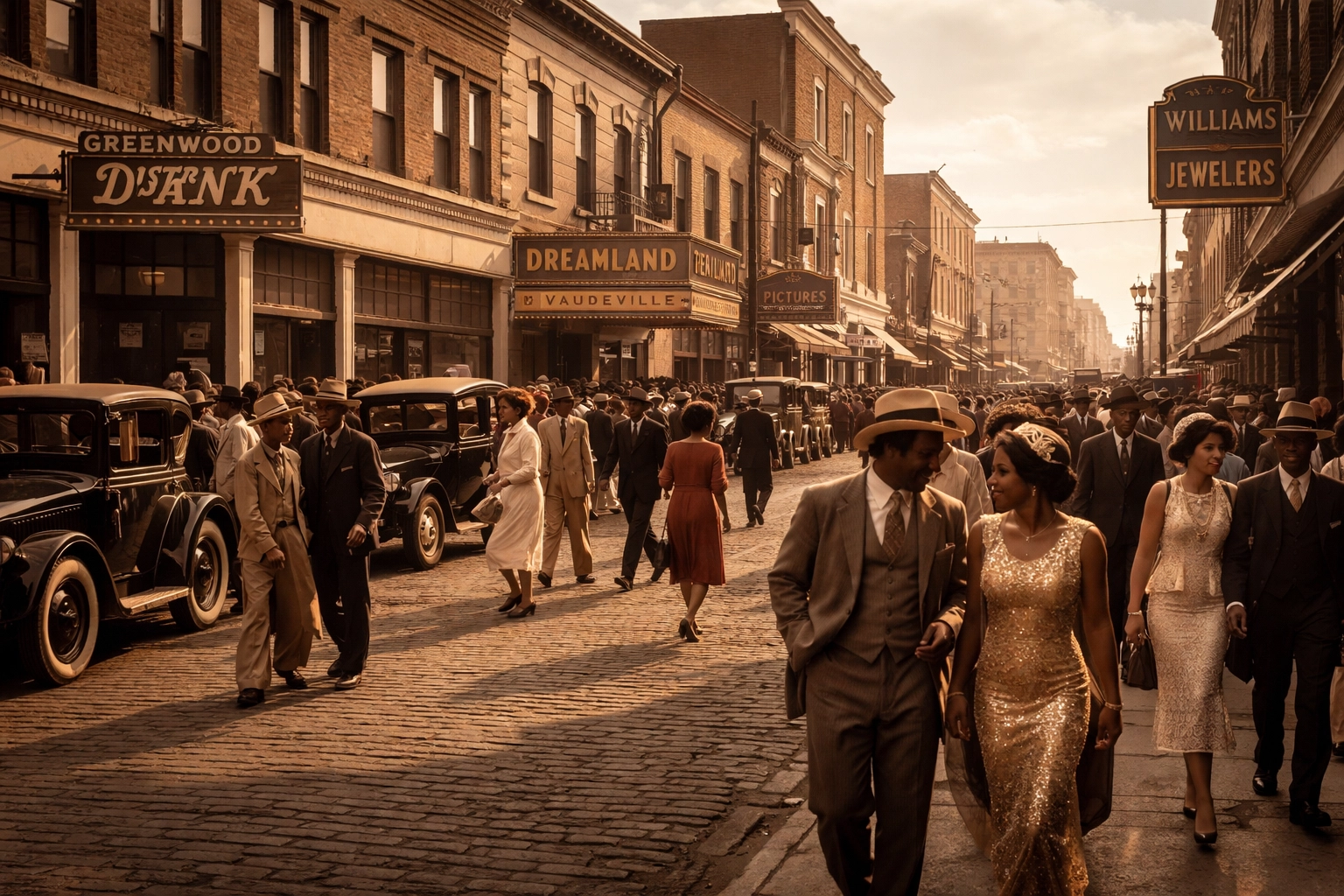
If you've heard the term "Black Wall Street," you know it started here: in the Greenwood District of Tulsa, Oklahoma.
By 1921, Greenwood was a 35-block radius of pure Black economic power. There were luxury hotels, theaters, jewelry stores, newspapers, law offices, and medical practices. A dollar circulated within the community 36 to 100 times before leaving. That's what we call keeping it in the family.
Greenwood wasn't just successful: it was threatening. So threatening that on May 31, 1921, it was attacked and burned to the ground in one of the worst acts of racial violence in American history. Hundreds were killed. Thousands were left homeless. Decades of wealth were destroyed in a single night.
But here's the thing about Black excellence: you can burn the buildings, but you can't burn the blueprint.
The spirit of Greenwood survived. And it's being rebuilt: digitally: right now.
1970s – A Global Cultural Explosion
The 1970s were different. The civil rights movement had shifted the landscape, and Black culture wasn't just surviving anymore: it was leading.
This decade saw the explosion of Black-owned record labels, fashion brands, publishing houses, and media companies. Soul Train brought Black music and dance into living rooms across America. Black designers were setting trends. Black entrepreneurs were building empires.
It was the era of self-expression, self-determination, and unapologetic Blackness. The message was clear: we're not just part of the culture: we ARE the culture.
And that energy? It never left. It just evolved.
2026 – The Digital Rebirth of Black Wall Streets

And that brings us to right now.
We're living in the digital renaissance. The barriers that once kept Black businesses hidden in the shadows have crumbled. Today, a Black-owned business in Atlanta can sell to a customer in London with a few clicks. A creator in Chicago can build a global brand from their living room.
This is where Black Wall Streets comes in.
We're not just an e-commerce platform. We're a movement. A digital marketplace designed to connect, empower, and elevate Black-owned businesses and the communities that support them. Think of it as Greenwood: rebuilt for the internet age.
When you shop with us, you're not just buying a product. You're investing in a legacy. You're circulating dollars within our community. You're proving that the spirit of 1921 didn't die: it went digital.
This is our time. This is our platform. And this is just the beginning.
The Future – A Legacy of Infinite Prosperity
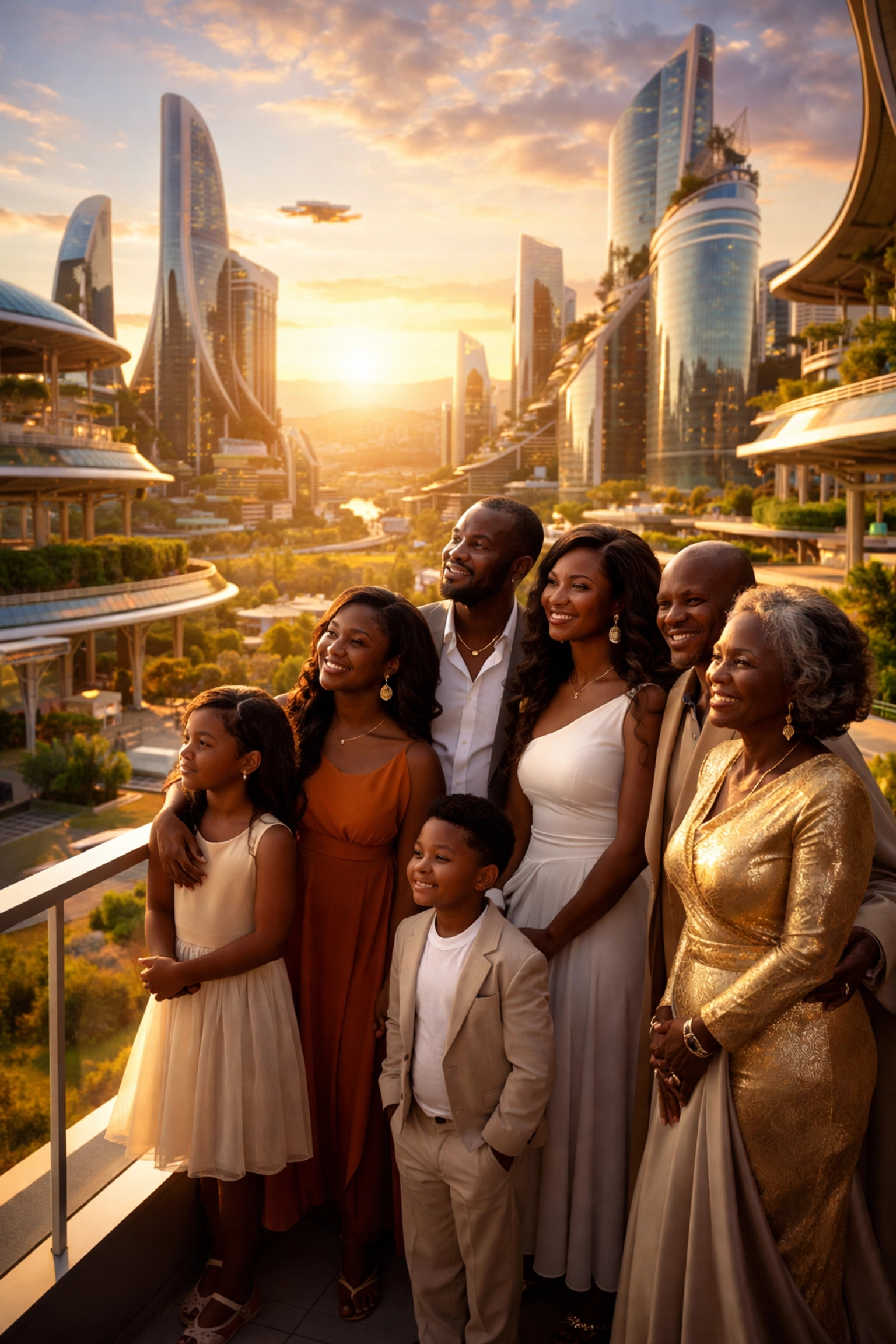
So what comes next?
Picture this: A world where Black commerce is fully integrated into the global economy. Where generational wealth isn't the exception: it's the norm. Where our children inherit not just money, but thriving businesses, real estate portfolios, and community institutions.
That future isn't a dream. It's a destination. And every purchase, every share, every connection we make on platforms like blackwallstreets.store brings us one step closer.
We are the descendants of pyramid builders, empire creators, and community architects. The same excellence that flowed through Kemet, through Mali, through Greenwood: it flows through us.
Your Place in This Story
Here's the beautiful part: this story isn't finished. You're writing it right now.
Every time you support a Black-owned business, you add a line. Every time you share our mission, you add a chapter. Every time you choose community over convenience, you honor the ancestors who built civilizations from nothing.
The journey from Kemet to 2026 is long. But we're still walking it: together.
Welcome to the movement. Welcome to The Black Wall Streets.
Let's build. 🖤