
Did You Know? 5 Black History Facts + Today's Inspiring Entrepreneur Spotlights That Prove Excellence Is Our Legacy

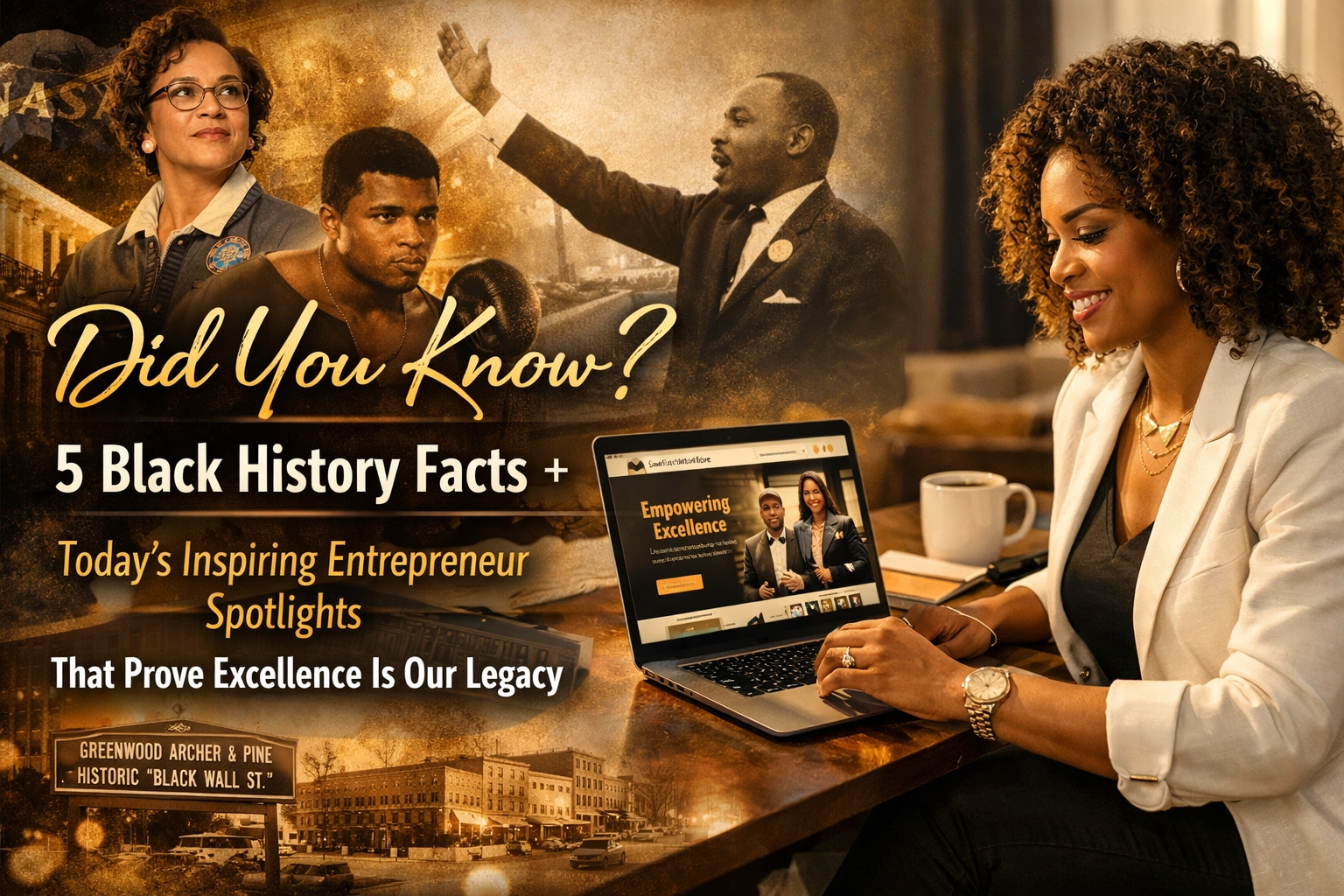
Look, we've been fed the same tired narrative for way too long, like Black history started with chains and ended with a speech on the steps of the Lincoln Memorial. But here's the truth bomb you need today: our legacy of excellence didn't start in America, and it sure didn't start with oppression.
Today marks something special. We're in 2026, exactly 100 years since Dr. Carter G. Woodson and five other visionaries planted the seeds for what would become Black History Month. A century of fighting to tell our own stories. A century of proving what we've always known: excellence is literally in our DNA.
So let's dive into five facts that'll make you sit up straighter, plus some entrepreneur spotlights that prove we're still building empires, just like our ancestors did thousands of years ago.
Did You Know #1: Ancient Kemet (Egypt) Was Black AF, And They Invented Half the Stuff We Use Today
Before there was Silicon Valley, there was the Nile Valley. Ancient Kemet, what colonizers renamed "Egypt", was a Black African civilization that gave the world mathematics, architecture, medicine, and engineering that still baffles scientists today.
We're talking about a civilization that built pyramids so precisely aligned with celestial bodies that we still can't fully explain how they did it. They performed brain surgery. They created the 365-day calendar. They had a writing system (hieroglyphics) so sophisticated it took modern scholars decades to decode it.
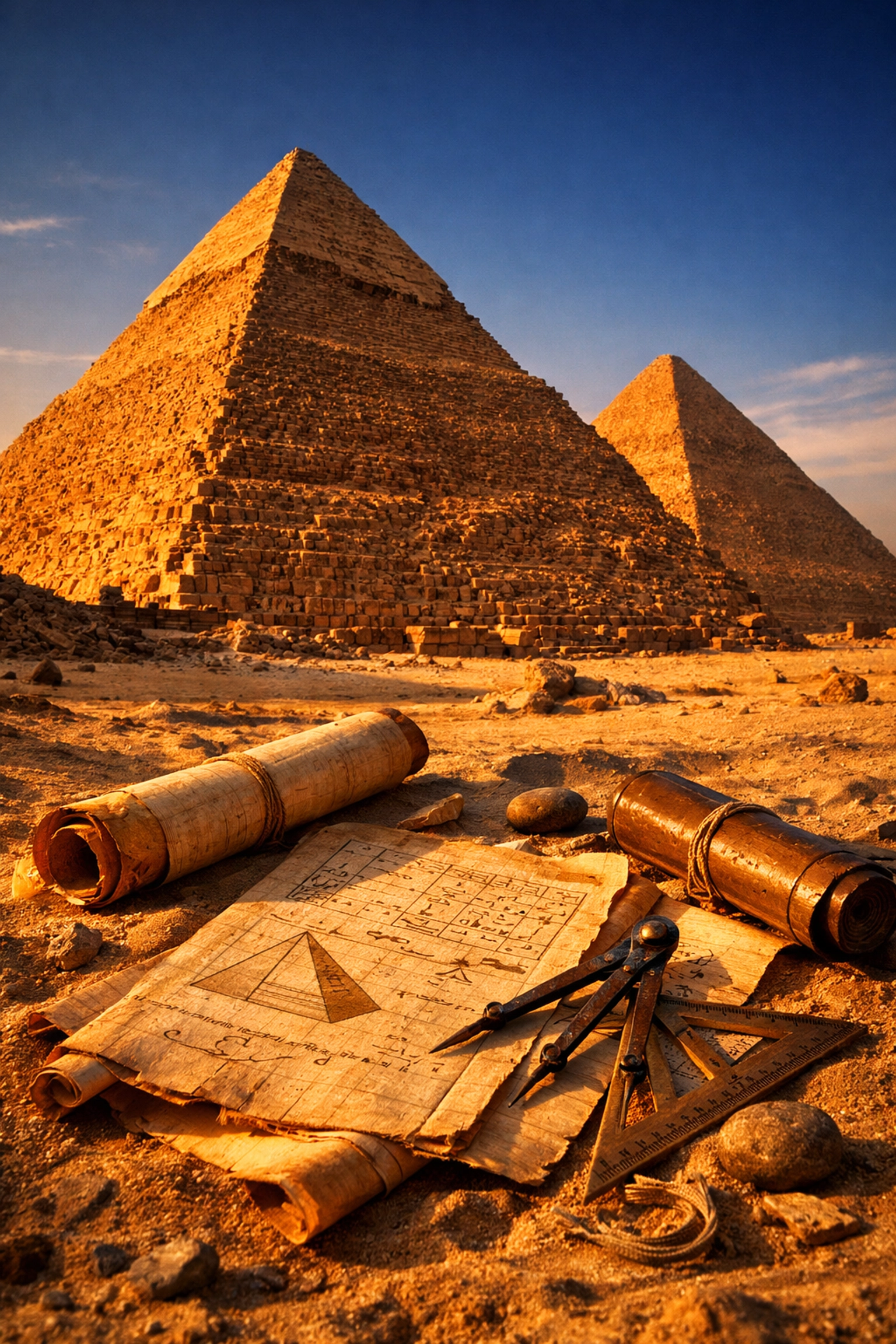
The Kemetic people weren't just surviving, they were thriving, innovating, and setting standards of excellence that would influence Greece, Rome, and eventually the entire Western world. When you hear someone say "Black people have no history," just remember: we had universities when Europe was still figuring out fire.
Did You Know #2: We've Been Celebrating Our History for 100 Years (And It Started with One Man's Vision)
Here's a name you need to know: Dr. Carter G. Woodson. This Harvard-trained historian looked around in 1926 and said, "Nah, we're not letting them erase us." So he created "Negro History Week", a dedicated time to celebrate Black achievements that textbooks conveniently left out.
Fast forward to 1976, and President Gerald Ford extended it to a full month. By 1986, Congress made it official. February became Black History Month, not as a cute gesture, but as a necessary correction to centuries of intentional erasure.
And get this, Woodson founded the Association for the Study of Negro Life and History back in 1915, over 110 years ago. That means for more than a century, we've been doing the work of documenting, preserving, and celebrating our own stories. Because if we don't tell them, who will?
Did You Know #3: Black Buying Power Hit $1.8 Trillion in 2024, But Only 2% Circulates Within Our Community
Let's talk numbers for a second, because this one's a wake-up call. According to Nielsen and Black Demographics data, Black Americans wield $1.8 trillion in buying power as of 2024. That's trillion with a T. We're literally an economic powerhouse.
But here's where it gets messy: only about 2% of that money stays within Black-owned businesses. Compare that to Asian and Jewish communities, where money circulates 6-7 times before leaving the community. We're basically funding everyone else's generational wealth while ours stays stagnant.

This isn't about guilt, it's about strategy. When we intentionally support Black-owned businesses, we're not just buying products. We're investing in job creation, community development, and building the kind of wealth that can be passed down to our kids and grandkids.
That's literally why platforms like The Black Wall Streets exist, to make it easier for you to find quality Black-owned products and keep our dollars circulating where they create the most impact.
Did You Know #4: A 21-Year-Old Student's Café Boycott Created America's First Anti-Discrimination Law
History books love to skip over the everyday heroes, so let me put you on to George Long. In 1952, this African American student at the University of New Mexico walked into a café in Albuquerque and got refused service. Simple as that. They wouldn't serve him because of his skin color.
But George didn't just take the L and walk away. He organized a boycott that shook the entire city. The result? The 1952 Albuquerque City Anti-Discrimination Ordinance, the very first municipal antidiscrimination law in the entire United States.
Think about that. A college student with no political power, no social media following, no viral moment, just conviction and community, changed history. He proved what we keep proving generation after generation: one person with courage can shift the entire game.
Did You Know #5: W.E.B. Du Bois Wasn't Just a Writer, He Was a Strategic Mastermind
Most people know W.E.B. Du Bois wrote "The Souls of Black Folk." But did you know he helped found the NAACP in 1909 and served as its director of publicity and research? That means he wasn't just philosophizing, he was strategizing, organizing, and building institutions designed to fight for our rights.
Du Bois understood something critical: you can't just talk about change; you have to create the infrastructure for it. He built organizations. He published research. He created platforms for Black voices when the mainstream media acted like we didn't exist.
Sound familiar? That's because the same principle applies today. We need our own platforms, our own marketplaces, our own economic ecosystems. We need spaces where Black excellence isn't the exception, it's the standard.
Today's Entrepreneur Spotlights: Building Modern-Day Black Wall Streets
Now let's talk about the modern-day builders who are carrying this legacy forward.
Spotlight #1: The Beauty Mogul Disrupting a $60 Billion Industry
While major beauty brands were still creating three shades of foundation and calling it "inclusive," Black women entrepreneurs said "bet" and built their own empire. Brands like Fenty Beauty (which generated over $550 million in its first year) proved there's massive demand for products that actually serve our community.
But it's not just the big names. Independent Black-owned beauty brands are generating millions by focusing on what we've always known: our hair is different, our skin tones are diverse, and we deserve products formulated specifically for us. When you support these businesses, you're voting with your dollars for representation, quality, and economic empowerment.
Spotlight #2: The Tech Founder Closing the Digital Divide
There's a Black tech founder right now building coding academies in underserved communities, creating pipelines for Black kids to enter tech careers that pay six figures straight out of college. While the tech industry still hovers around 3-5% Black representation, entrepreneurs are building the infrastructure to change that: one bootcamp, one scholarship, one mentorship program at a time.
These aren't charity cases. These are strategic investments in human capital that will pay dividends for generations. When a Black kid from the hood becomes a software engineer making $150K, that's wealth entering a community that's been systematically locked out of it.
Spotlight #3: The Marketplace Connector Making "Buy Black" Easy
And then there are platforms like The Black Wall Streets, literally named after the thriving Greenwood District in Tulsa before it was destroyed in 1921. The mission? Make it stupid easy to find and support Black-owned businesses across every category you can imagine.
Because let's be real: "buy Black" intentions are great, but if you can't find Black-owned businesses when you're ready to purchase, those intentions don't mean much. That's why curated marketplaces matter. They remove the friction, increase visibility, and create economic opportunity at scale.
The Bridge Between Yesterday and Tomorrow
Here's what connects Ancient Kemet to Carter G. Woodson to George Long to today's entrepreneurs: intentionality.
Our ancestors didn't stumble into building pyramids. Woodson didn't accidentally create Black History Month. George Long didn't randomly end up changing laws. And today's Black entrepreneurs aren't just lucky: they're strategic, they're skilled, and they're building with purpose.
The same excellence that created the first universities, performed the first surgeries, and organized the first civil rights movements is flowing through Black businesses right now. When you choose to support them, you're not doing charity work. You're investing in proven excellence.
You're also doing something our ancestors couldn't always do: you're keeping wealth in our community. You're creating jobs. You're funding the next generation of Black innovators who will cure diseases, build technologies, and create art that moves the culture forward.
Your Move
So here's the challenge: This week, redirect just 10% of your spending to Black-owned businesses. Not next month. Not when you remember. This week.
Whether it's that candle you were gonna buy from Target, those accessories you were browsing on Amazon, or that gift you need for your homie's birthday: find the Black-owned version first. Platforms like The Black Wall Streets literally exist to make this effortless.
Because here's the truth: every dollar you spend is a vote for the kind of world you want to live in. And if we want a world where Black businesses thrive, where our kids inherit wealth instead of debt, where our community has the same economic infrastructure that other communities take for granted: we have to build it.
Just like our ancestors built Kemet. Just like Woodson built Black History Month. Just like every entrepreneur grinding right now is building their piece of the legacy.
Excellence isn't new to us. We've been excellent. The question is: are you going to support it?
Drop a comment below with one Black-owned business you're supporting this week. Let's build together.