
February’s Black History Heroes: 5 Money Moves They’d Make at BlackWallStreets Today

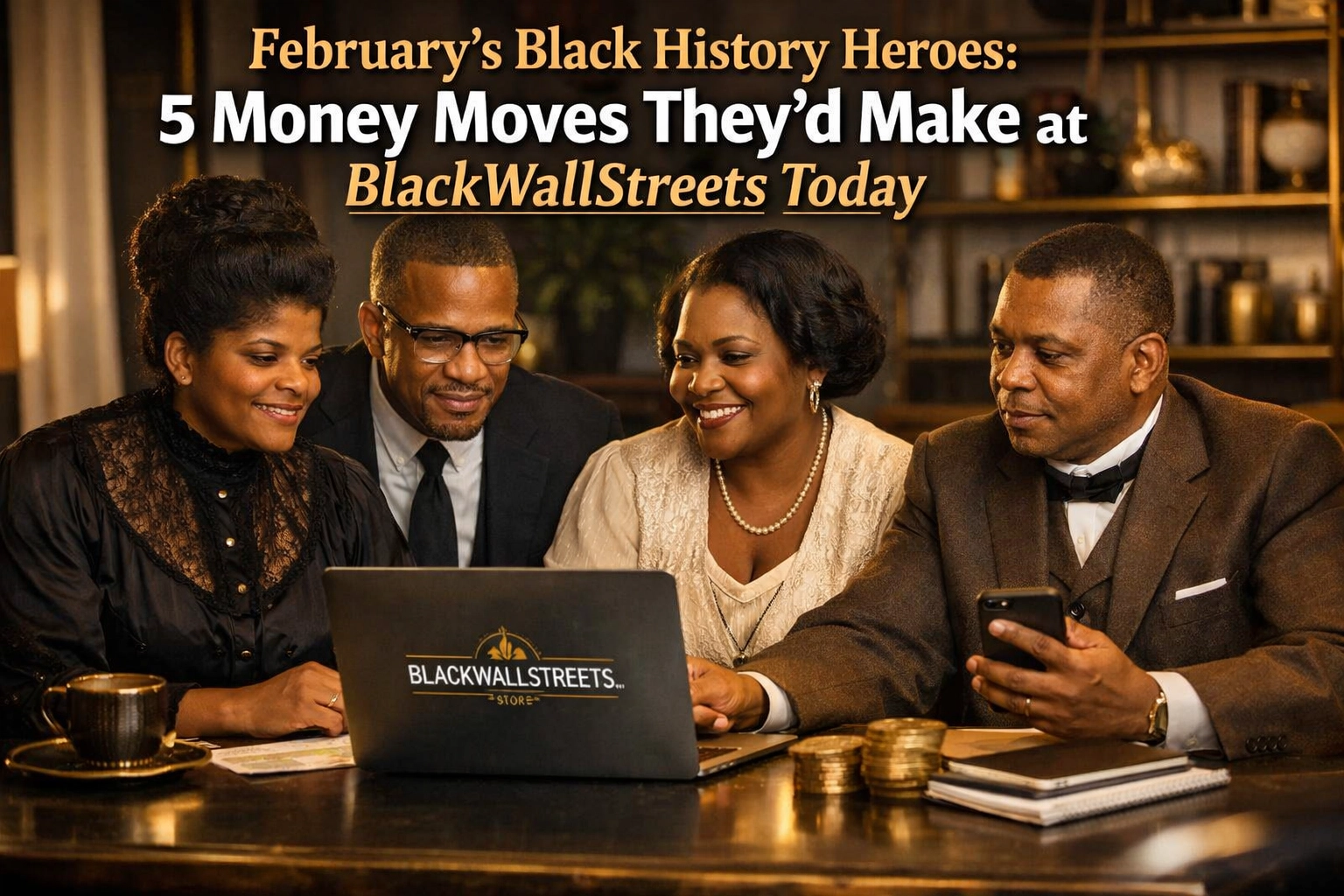
February isn't just about looking back: it's about looking forward with the wisdom of those who paved the way. This Black History Month, we're doing something different. We're imagining what five legendary Black entrepreneurs would do if they could shop, invest, and build on BlackWallStreets.store today.
These weren't just history makers. They were wealth builders, community uplifters, and unapologetic believers in Black economic power. So let's get into it: here are the money moves they'd absolutely make in 2026.
1. Madam C.J. Walker Would Be All Over Black-Owned Beauty & Wellness
Born Sarah Breedlove in 1867, Madam C.J. Walker went from washing clothes for $1.50 a day to becoming America's first self-made female millionaire. She built an empire selling hair care products specifically designed for Black women: a market everyone else ignored. But here's the thing: she didn't just get rich. She employed thousands of Black women as sales agents, giving them financial independence at a time when options were slim to none.
Her 2026 Move: Walker would be curating a subscription box of Black-owned beauty and wellness products from BlackWallStreets.store every single month. She understood that when you buyblack, you're not just getting quality products: you're funding someone's dream, feeding someone's family, and keeping dollars circulating in our community.
She'd probably drop a monthly tutorial series featuring different Black-owned brands, showing her audience how to incorporate these products into their routines. Because for Walker, it was never just about the sale: it was about creating a movement.
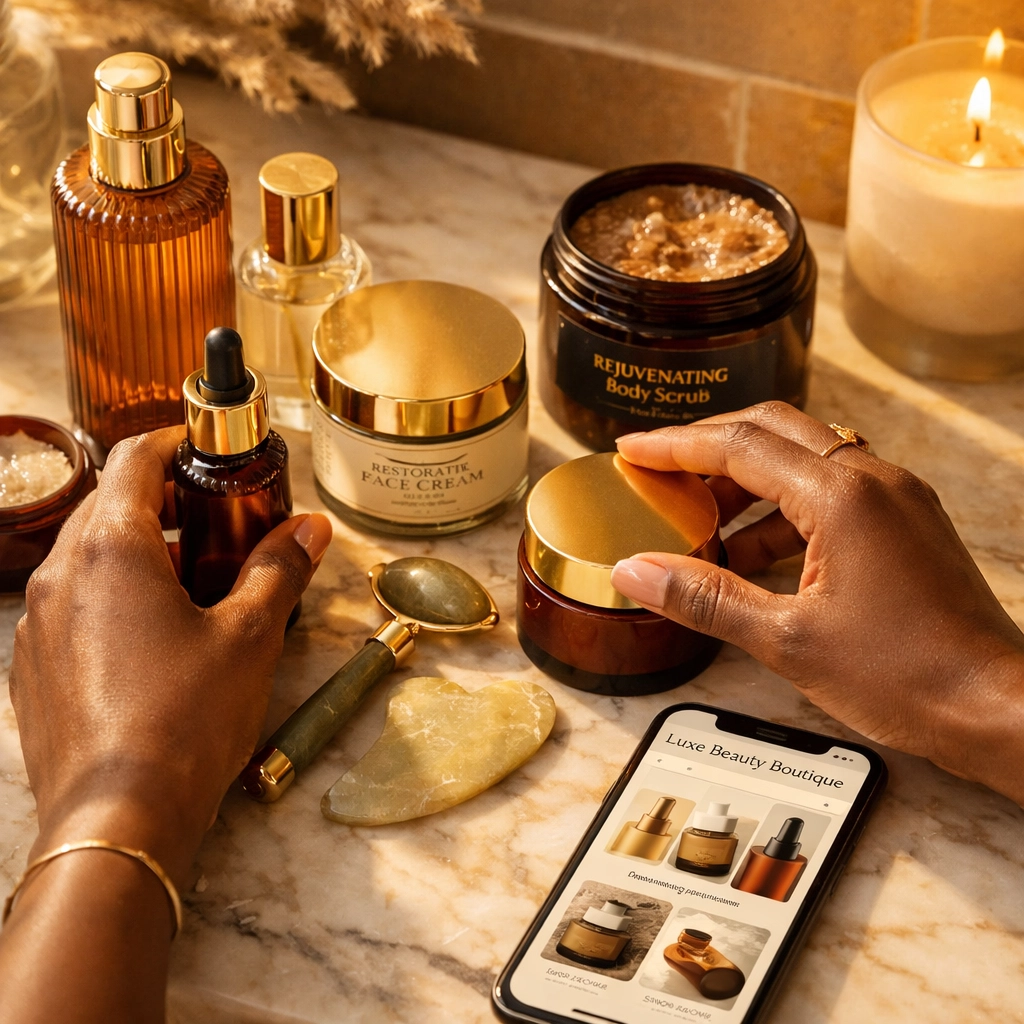
Your Move: Browse the beauty and wellness categories on BlackWallStreets.store this month. Commit to replacing at least one product in your routine with a Black-owned alternative. That's how economic ecosystems get built: one intentional purchase at a time.
2. Maggie Lena Walker Would Champion Black Financial Literacy & Banking
Maggie Lena Walker made history in 1903 as the first Black woman to charter a bank in the United States: the St. Luke Penny Savings Bank in Richmond, Virginia. But she wasn't just about banking. She ran a newspaper, a department store, and was all about creating institutions that served the Black community. Her motto? "Let us put our moneys together; let us use our moneys; let us put our money out at usury among ourselves, and reap the benefit ourselves."
Sound familiar? That's basically the blueprint for what we're doing at BlackWallStreets.store.
Her 2026 Move: Walker would be hosting weekly financial literacy workshops in the BlackWallStreets community, teaching people how to build wealth through strategic spending. She'd create challenges like "The 30-Day Buyblack Challenge" where participants commit to spending intentionally with Black-owned businesses and tracking the impact on their own financial awareness.
She'd also be the first to advocate for a BlackWallStreets business mentorship program: connecting new sellers with established ones, because she knew that rising together is the only way to actually rise.
Your Move: Start tracking where your money goes. For the next 30 days, keep a spending journal. How much are you investing back into Black-owned businesses versus corporations that don't invest in us? Knowledge is power, and Walker would want you to know your numbers.
3. A.G. Gaston Would Master the Art of Diversification
Arthur George Gaston started with a burial insurance company that charged 25 cents per policy in 1923. By the time he passed in 1996, he'd built a business empire worth over $130 million, including insurance companies, a bank, a radio station, and a motel where Dr. Martin Luther King Jr. planned civil rights strategies. Gaston understood something crucial: don't put all your eggs in one basket, and always own the infrastructure.
His 2026 Move: Gaston would have multiple storefronts on BlackWallStreets.store: not just one business, but an interconnected network. Maybe a clothing line, a book publishing venture, and a consulting service all under one umbrella. He'd use the platform to cross-promote between his businesses and collaborate with other Black entrepreneurs for bundled offerings.

He'd probably launch a "BlackWallStreets Collective": a group of complementary businesses (fashion, photography, event planning, catering) that package their services together for weddings, corporate events, and celebrations. Because Gaston knew that strategic partnerships multiply success.
Your Move: If you're a business owner on BlackWallStreets.store, who can you partner with? If you're a customer, look for opportunities to support multiple Black-owned businesses in one transaction. Planning an event? Source everything from Black vendors. That's how you build economic momentum.
4. Reginald F. Lewis Would Turn BlackWallStreets Into a Billion-Dollar Ecosystem
Reginald F. Lewis was the first Black American to build a billion-dollar company when he orchestrated the leveraged buyout of Beatrice International Foods in 1987 for $985 million. He was a Harvard Law graduate who understood high finance and wasn't afraid to play in spaces where he wasn't always welcomed. His biography was literally titled "Why Should White Guys Have All the Fun?"
His 2026 Move: Lewis would be working behind the scenes to create investment vehicles that funnel capital into Black-owned businesses on the platform. He'd launch a "BlackWallStreets Venture Fund" where community members could invest small amounts that pool together to provide growth capital for promising Black entrepreneurs.
He'd also be leveraging data. Lewis would analyze which categories are underserved, which products have the highest demand, and where there are opportunities for Black entrepreneurs to fill market gaps. Then he'd actively recruit businesses to join the platform in those areas.
Your Move: Think beyond just buying. How can you invest? Can you become an affiliate promoter for your favorite BlackWallStreets businesses? Can you gift Black-owned products for every birthday and holiday in your circle? Lewis would tell you to think bigger and play the long game.
5. Berry Gordy Would Build a BlackWallStreets Influencer Army
Berry Gordy Jr. founded Motown Records with an $800 loan in 1959 and turned it into a cultural phenomenon that changed American music forever. But Gordy wasn't just about music: he built a system. He had songwriters, producers, choreographers, and a whole artist development department. He created stars, then created the infrastructure to support them. Motown wasn't just a record label; it was a movement.
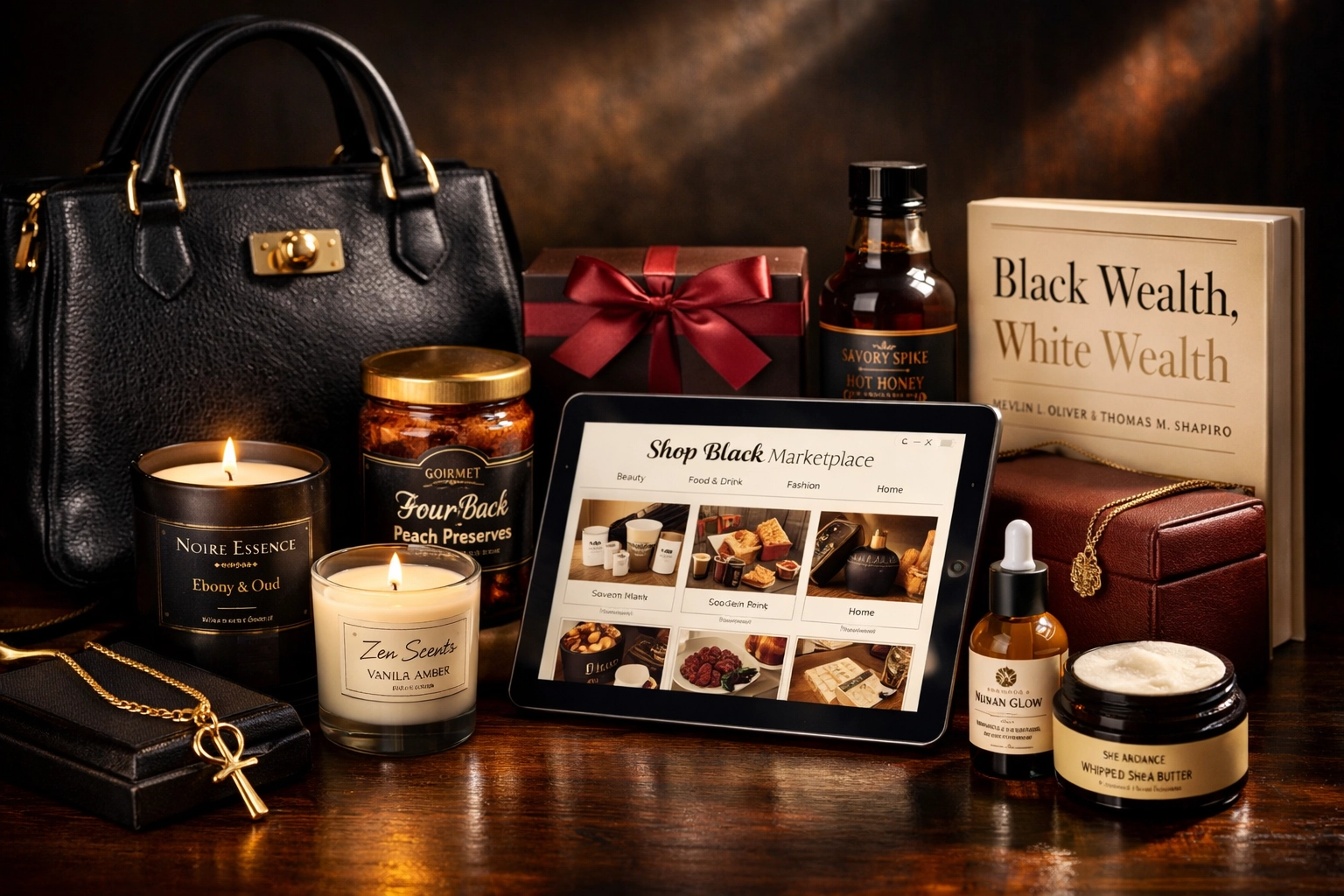
His 2026 Move: Gordy would be building a content creator program on BlackWallStreets.store: training Black influencers, photographers, videographers, and writers to showcase Black-owned businesses in compelling ways. He'd understand that in 2026, visibility is currency.
He'd launch "Buyblack Ambassador" programs where micro-influencers get early access to new products in exchange for authentic reviews and content. He'd create a whole ecosystem where creators and businesses grow together, just like he did with Motown artists and producers.
Gordy would also be all about storytelling. Every product on BlackWallStreets.store would have a story: who made it, why they made it, what it means to the community. Because people don't just buy products; they buy meaning, connection, and purpose.
Your Move: Use your platform, no matter how small. Share your favorite finds from BlackWallStreets.store on social media. Tag the businesses. Write reviews. Tell the stories. You don't need a million followers to make an impact: you just need to be authentic and consistent.
The Thread That Connects Them All
What do all these legends have in common? They didn't wait for permission. They didn't wait for perfect conditions. They saw a need in the Black community and they filled it. They built wealth not just for themselves, but for their communities.
That's exactly what BlackWallStreets.store is about in 2026. It's not just a marketplace: it's a movement. Every time you choose to buyblack, you're voting with your dollars. You're saying that Black businesses matter, Black dreams matter, and Black economic power matters.
These five heroes would be all in on this platform because they'd recognize it for what it is: the digital evolution of everything they fought to build. A place where Black entrepreneurs can thrive, where Black consumers can find exactly what they need, and where wealth circulates within our community instead of flowing out of it.
Your February Challenge
This Black History Month, don't just celebrate: participate. Pick one money move inspired by these legends and commit to it for the next 30 days:
- The Walker Move: Replace one product with a Black-owned alternative
- The Maggie Walker Move: Track your spending and increase your buyblack percentage
- The Gaston Move: Support multiple Black-owned businesses in one transaction
- The Lewis Move: Think about how you can invest, not just spend
- The Gordy Move: Share and promote Black-owned businesses you love
History isn't just about what happened: it's about what happens next. And what happens next is up to us.
Let's build.