
From Black Wall Street Tulsa to Today: The Ultimate Guide to Supporting Black Commerce

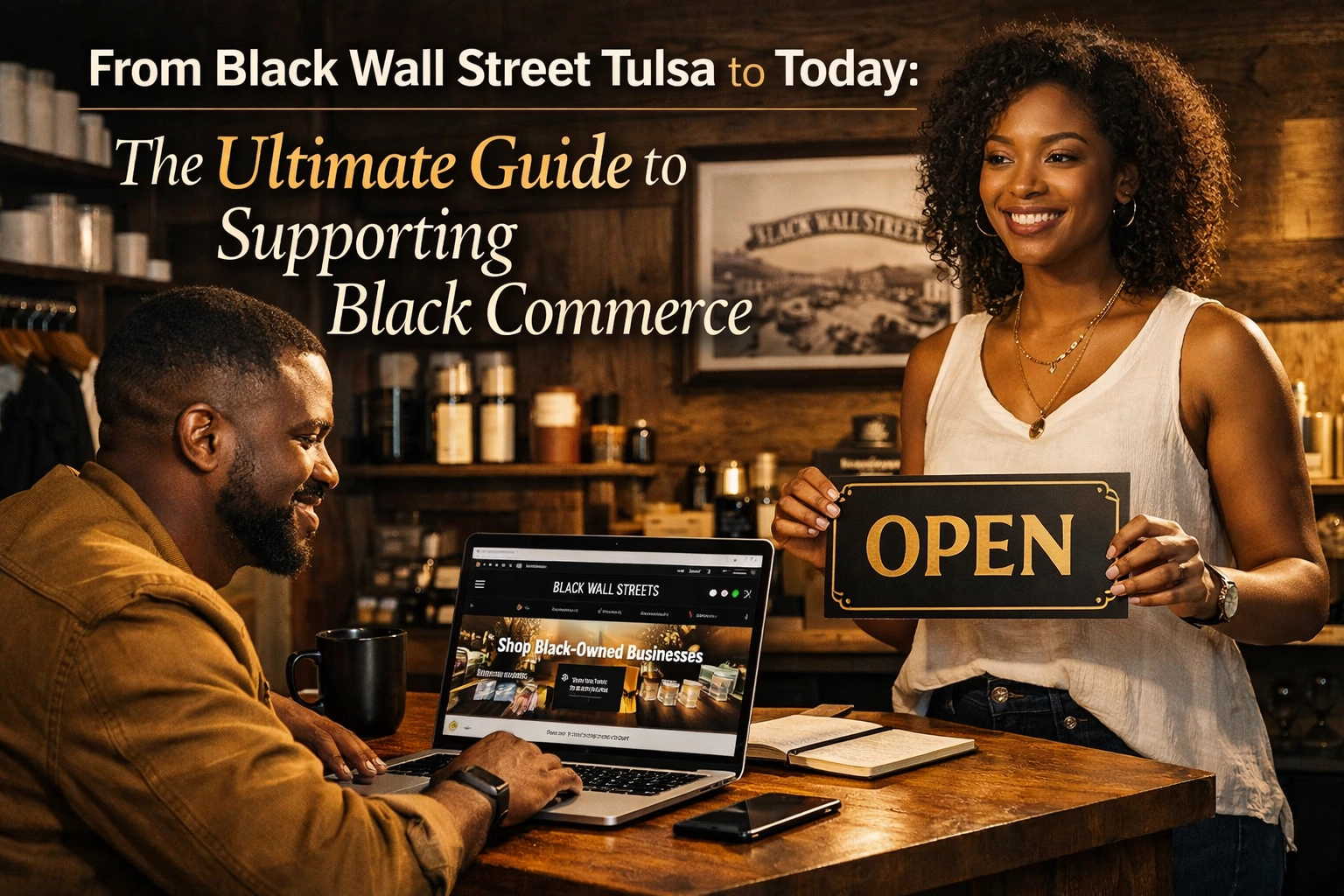
History has a way of repeating itself, but only if we choose to let it. When O.W. Gurley purchased 40 acres of land in Tulsa, Oklahoma in 1906, he wasn't just buying real estate. He was planting the seeds of what would become one of the most prosperous Black communities America had ever seen. Today, over a century later, we're witnessing a renaissance of Black entrepreneurship and intentional commerce that echoes that same revolutionary spirit.
Let's talk about where we've been, what we lost, and how every purchase you make today can help rebuild what should have never been destroyed in the first place.
The Rise of Black Wall Street: More Than Just Business
The Greenwood District didn't just happen by accident. It was intentional. Gurley sold his land exclusively to Black settlers, creating a blueprint for what true economic empowerment could look like. By 1920, while Tulsa's population exploded from 10,000 to over 100,000 (thanks to the oil boom), the Greenwood District became home to nearly 12.3% of that population, and they weren't just surviving, they were thriving.

Picture this: Black doctors treating Black patients. Black lawyers representing Black clients. Black-owned hotels, theaters, grocery stores, and luxury shops lining the streets. The community created what economists call a "multiplier effect", money circulated within the community multiple times before leaving. When a Black employee got paid, they'd shop at Black-owned stores. Those store owners would hire more Black workers and purchase inventory from other Black suppliers. Wealth wasn't just earned; it was recycled, reinvested, and multiplied.
This wasn't just commerce. It was economic self-determination in action.
May 31, 1921: The Day Prosperity Became a Target
Here's the hard truth we have to face: Black Wall Street's success made it a target. On May 31 and June 1, 1921, white mobs descended on the Greenwood District in what can only be described as domestic terrorism. In less than 24 hours, they destroyed 35 city blocks, burned 190 businesses to the ground, and demolished approximately 1,000 homes. Between 150 and 300 people were killed. The property damage? Around $31 million in today's dollars, and not a single insurance claim was honored for Black victims.
Let that sink in. An entire community built from nothing, destroyed in a day, with zero accountability or restitution.
The Greenwood District eventually rebuilt. By the 1940s, there were even more businesses than before the massacre. But the original spirit, that concentrated economic power, never fully recovered. Integration in the 1960s, while crucial for civil rights, ironically contributed to the decline as Black dollars began flowing out of the community and into mainstream (read: white-owned) businesses.
Why Supporting Black Commerce Isn't Just Shopping, It's Reparation in Action
Fast forward to 2026, and here's where we are: Black people represent 14% of the U.S. population but own less than 2% of businesses. That wealth gap? It's not an accident. It's the direct result of centuries of systemic barriers, from slavery to Jim Crow to redlining to the outright destruction of prosperous Black communities like Greenwood.
But here's the beautiful part, you have power. Every time you choose to spend your money at a Black-owned business, you're not just buying a product. You're:
- Creating jobs in the Black community
- Building generational wealth
- Voting with your wallet for economic equity
- Continuing the legacy that O.W. Gurley started in 1906
Supporting Black commerce is about more than nostalgia for what Black Wall Street was. It's about creating what Black Wall Street 2.0 can be, digital, global, and unstoppable.
The Ultimate Guide: How to Support Black Businesses (The Right Way)
Let's get practical. You want to support Black commerce? Here's your playbook:
1. Make Black-Owned Your Default, Not Your Exception
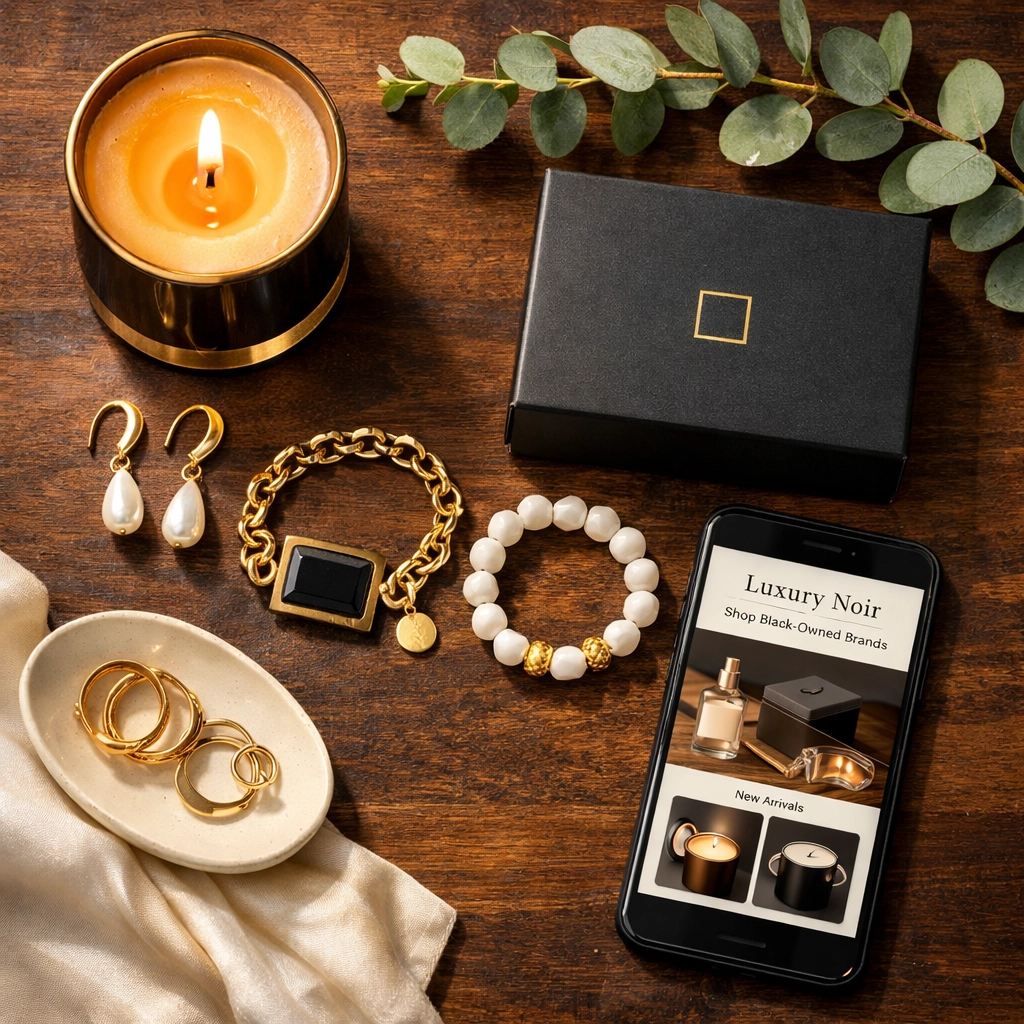
Stop treating Black-owned businesses like a February-only thing or a social media challenge. Make it your lifestyle. Need candles? Check for Black-owned brands first. Shopping for jewelry? Start with Black artisans. Looking for home décor? You know where to go (hint: right here).
2. Shop Directly, Not Through Third Parties
When possible, buy straight from the source. That means visiting Black-owned websites instead of always defaulting to Amazon or big-box stores. Yes, it might take an extra two minutes to find the actual business website, but those two minutes mean the owner keeps more profit, builds their brand, and has resources to grow.

3. Leave Reviews and Share Your Experience
Black businesses often lack the marketing budgets of major corporations. Your five-star review? That's free marketing gold. Your Instagram story tagging their brand? That reaches people who trust your taste. Word-of-mouth is still the most powerful currency in commerce, especially for small businesses.
4. Understand That Quality Costs Money
Let's address the elephant in the room: some Black-owned products cost more than mass-produced alternatives. That's because you're paying for:
- Ethically sourced materials
- Fair wages
- Small-batch quality
- The absence of exploitative labor practices
When you buy a luxury candle from a Black-owned brand, you're not just getting a candle: you're getting craftsmanship, intention, and the peace of mind that your money went to building someone's dream instead of padding a billionaire's portfolio.
5. Invest in Black-Owned Businesses (Beyond Just Buying Products)
If you have the means, consider:
- Investing in Black-owned startups
- Supporting crowdfunding campaigns for Black entrepreneurs
- Offering your skills pro bono (marketing, legal, design) to Black business owners
- Mentoring aspiring Black entrepreneurs in your industry
The Black Wall Streets: Where History Meets the Digital Age
This is where our story comes full circle. The Black Wall Streets isn't just a marketplace: it's a movement. We're building exactly what the Greenwood District represented: a thriving ecosystem where Black businesses don't just survive, they flourish.

From luxury home décor that transforms your space into a sanctuary, to motivational fashion that lets you wear your pride on your sleeve, to beauty products created by people who actually understand your skin and hair: we've curated a collection that proves Black excellence isn't a trend. It's a tradition.
Every vendor on our platform is vetted. Every product tells a story. And every purchase you make here contributes to that multiplier effect that made the original Black Wall Street so powerful.
Your Next Move
History doesn't have to repeat itself: but legacy can. The economic power that was stolen from Greenwood in 1921 can be rebuilt, transaction by transaction, business by business, community by community.
Start today. Browse our marketplace and find something that speaks to you: a candle that fills your home with intention, a piece of jewelry that makes you feel powerful, or a home décor item that reminds you of where we've been and where we're going.
Because when you support Black businesses, you're not just shopping. You're honoring ancestors who built empires from nothing. You're funding futures that refuse to be limited. And you're proving that no matter what history tried to burn down, we'll always rebuild: stronger, smarter, and more united than before.
That's the real Black Wall Street legacy. And it starts with you.