
Your Daily Dose of Black Excellence: Breaking News, Ancient History & The Entrepreneurs Rebuilding Our Economic Legacy

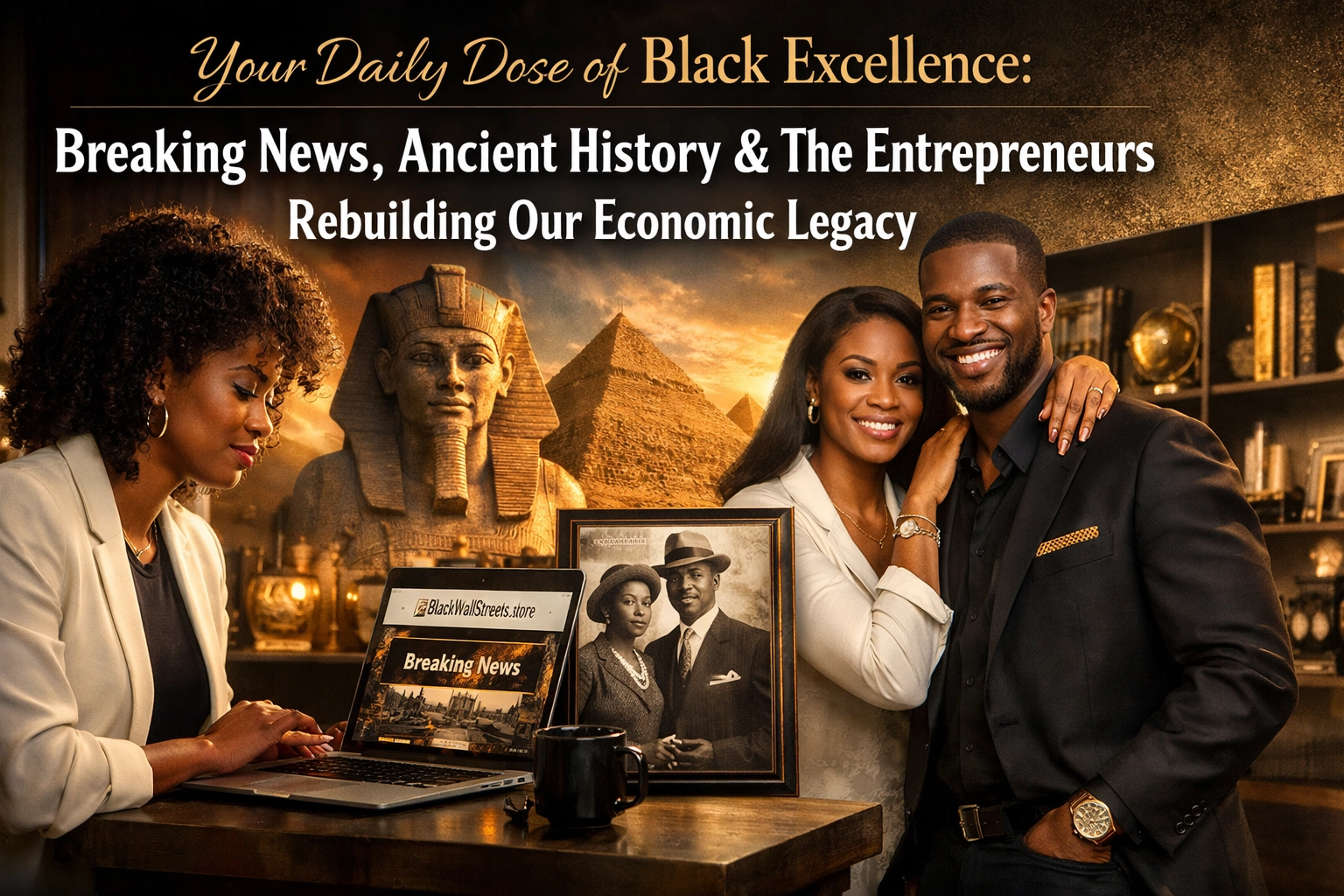
Welcome to February 1st, 2026, and if you didn't already have this date circled on your calendar, let me give you three good reasons why you should: it's the first day of Black History Month, it's officially Black Excellence Month, and it marks 100 years since Dr. Carter G. Woodson planted the seeds of what would become our annual celebration of Black achievement and resilience.
That's right. A whole century of intentionally celebrating our stories, our brilliance, and our undeniable impact on this world.
But here's the thing, we're not just looking back. We're building forward. And today's dose of Black excellence is all about connecting the dots between where we came from, what's happening right now, and where we're going as a community. So grab your coffee (or tea, we don't judge), and let's dive in.
Breaking News: Black History Month 2026 Is Different This Time
Across the country, institutions are going all out this February. And honestly? It's about time.
Cal State San Marcos is hosting a monthlong Black Excellence celebration that culminates in a Black Excellence Gala on February 27th. Meanwhile, Ontario organizations are spotlighting Black women innovators in STEM, a much-needed reminder that Black women have been the backbone of scientific advancement for generations, from Katherine Johnson calculating NASA's trajectories to modern-day tech founders changing the game.
Up in La Crosse, Wisconsin, they're gearing up for their 6th Annual Black Excellence Celebration on February 28th. And perhaps most significantly, the University of Arizona is commemorating the centennial, yes, 100 years, of Dr. Woodson's founding of Negro History Week back in 1926.
Think about that for a second. One man decided our stories mattered enough to dedicate a whole week to them. Now we've got a whole month, and institutions nationwide are finally treating it with the reverence it deserves.

Did You Know? Ancient Kemet Was Built on Black Genius
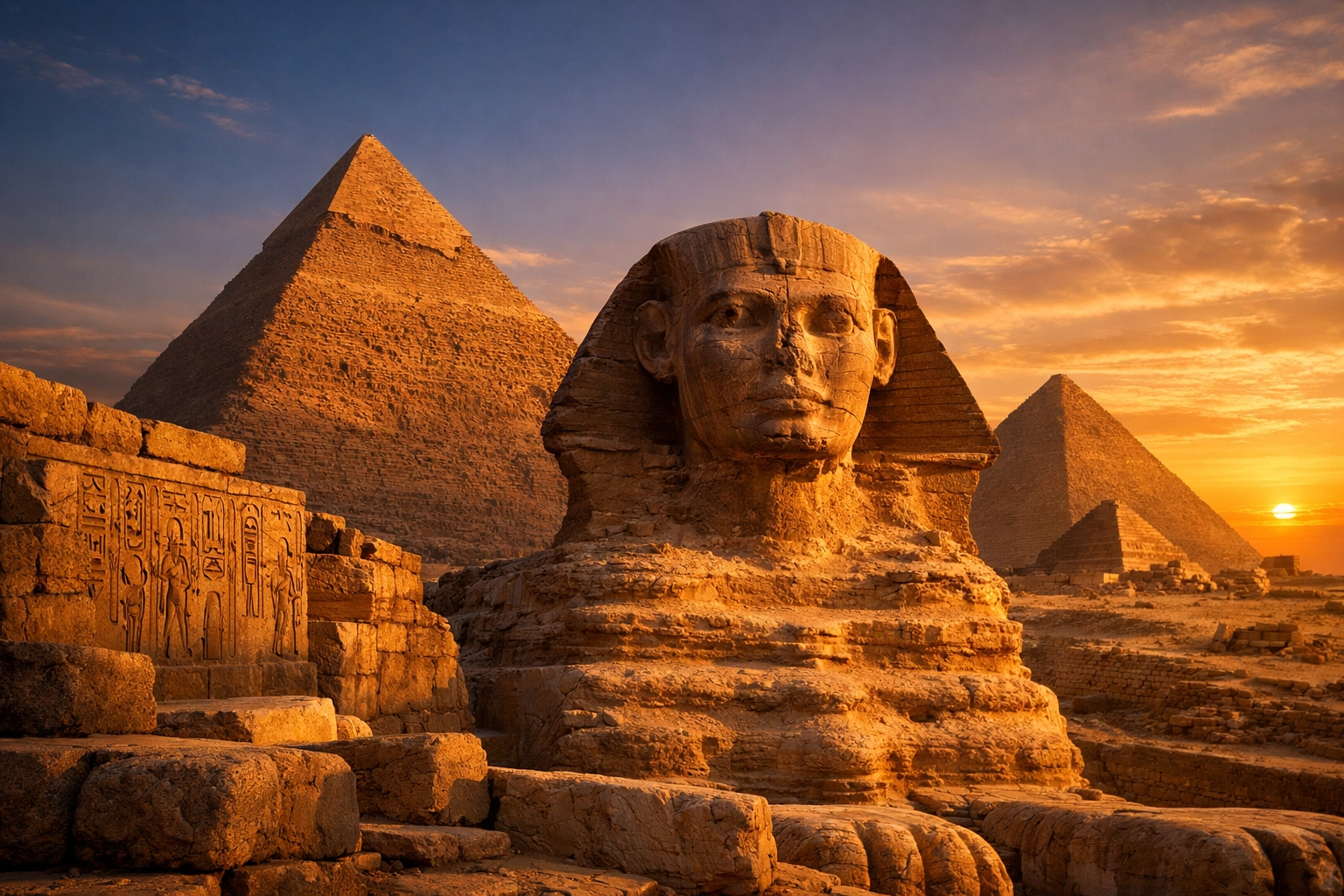
While we're celebrating this month, let's time travel back a few thousand years. Because before there was a Black Wall Street in Tulsa, before there were HBCUs, before there was even a "Black History Month," there was Kemet, what we now call Ancient Egypt.
Here's what they don't always teach you in school: Ancient Kemet was a Black African civilization that dominated the world for over 3,000 years. We're talking about a society that built the pyramids (which still baffle engineers today), developed one of the first writing systems (hieroglyphics), and created medical practices so advanced that some are still referenced in modern medicine.
The Kemetic people understood mathematics, astronomy, architecture, and agriculture at levels that wouldn't be matched in Europe for centuries. They had a 365-day calendar. They performed successful surgeries. They built structures so precisely aligned with the stars that we're still studying how they did it.
And yes, they were Black.
This isn't alternative history or Afrocentrism. This is just… history. The kind that gets conveniently glossed over or whitewashed in mainstream education. But knowing where we come from? That's power. That's the foundation.
Because when you understand that your ancestors were building empires and advancing civilization while others were still figuring out basic agriculture, it hits different. It changes how you see yourself, your potential, and your place in this world.
Today's Entrepreneur Spotlight: The New Economic Architects
Speaking of building empires, let's talk about what's happening right now in 2026.
According to BlackDemographics.com, Black buying power in the United States has surpassed $1.8 trillion. Yes, trillion with a T. We're one of the most powerful consumer groups in the country. But here's the reality check: only about 2 cents of every dollar Black consumers spend actually stays within the Black community.
Compare that to other communities where dollars circulate 6, 8, even 28 times before leaving the community, and you start to see the problem, and the opportunity.
Enter the new wave of Black entrepreneurs who aren't just building businesses; they're building economic ecosystems. They're the modern-day descendants of Madam C.J. Walker, Tulsa's Black Wall Street entrepreneurs, and yes, the architectural minds of Ancient Kemet.
These business owners are creating products, services, and platforms that keep our dollars circulating within our community. They're manufacturing beauty products, designing fashion lines, crafting home goods, and building tech platforms, all while employing other Black professionals and investing back into Black neighborhoods.
They're not waiting for permission or validation from mainstream markets. They're carving out their own lanes, building their own distribution channels, and creating their own definitions of success.
And the stats back this up: According to recent data, Black women are the fastest-growing group of entrepreneurs in the United States, starting businesses at rates that outpace every other demographic. Despite facing significantly less access to capital (Black founders receive less than 2% of venture capital funding), they're still out here making it happen.
That's not just impressive. That's revolutionary.
The Connection You Can't Ignore
So what do Black History Month celebrations, Ancient Kemet, and today's Black entrepreneurs all have in common?
Resilience. Innovation. Excellence despite the odds.
Our ancestors built civilizations from nothing. They survived the Middle Passage. They created thriving economic districts like Tulsa's Black Wall Street, only to have them destroyed and then rebuild anyway. They marched, organized, and fought for civil rights. They invented, created, and innovated even when their contributions were erased from history books.
And now? We're doing it again.
Every time you support a Black-owned business, you're participating in an act of economic resistance and community building that stretches back thousands of years. You're saying that our dollars matter, our businesses matter, and our economic independence matters.
This isn't just shopping. It's a movement.

The Black Wall Street Mission: Building the Future We Deserve
Here's where it all comes together.
The original Black Wall Street in Tulsa wasn't just about Black people spending money with Black businesses (though that was crucial). It was about creating a self-sustaining economic ecosystem where wealth could build, generational assets could grow, and the entire community could thrive.
That's exactly what we're rebuilding at blackwallstreets.store, a digital marketplace where Black entrepreneurs can showcase their products, connect with conscious consumers, and keep those dollars circulating where they belong.
Think of it as the modern version of what our ancestors built in Tulsa, but with 2026 technology and a global reach. Every purchase you make, every vendor you support, every product you share, it all contributes to rebuilding our economic legacy.
And the timing? Right at the start of Black History Month 2026, marking 100 years since Dr. Woodson formalized our commitment to celebrating Black excellence? That's not coincidence. That's destiny.
Your Move: How to Participate in History
Look, reading about Black excellence is cool. But living it? That's where the magic happens.
Here's your challenge for this Black History Month:
Commit to supporting at least one Black-owned business per week. Could be a restaurant, a clothing brand, a bookstore, a tech service, doesn't matter. What matters is making it intentional.
Share the stories. When you find a dope Black-owned product or service, tell people about it. Post it. Tag it. Spread the word. We've got centuries of history showing us that our voices, when unified, are unstoppable.
Educate yourself beyond February. Learn about Ancient Kemet. Research the original Black Wall Street. Study the Harlem Renaissance. Understand redlining and its ongoing impacts. Knowledge is the foundation of power.
And yeah, shop at blackwallstreets.store. Browse the vendors. Support the entrepreneurs. Be part of rebuilding something that should never have been destroyed in the first place.
The Bottom Line
We're standing at an interesting crossroads in 2026. We've got a hundred years of Black History Month celebrations behind us, thousands of years of Black excellence before that, and unlimited potential ahead of us.
The question isn't whether we can build generational wealth and economic power. Our ancestors already proved that we can, multiple times, across multiple continents, over multiple millennia.
The question is: Will we?
Because every dollar you spend is a vote for the world you want to live in. Every business you support is a brick in the foundation we're building. Every story you share is a thread in the tapestry of our collective history.
From the pyramids of Kemet to the businesses of Black Wall Street to the digital marketplaces of 2026, we've always been builders. Always been innovators. Always been excellent.
Happy Black History Month. Now let's go make some more history worth celebrating.